Solitaire - Classic Card Game
- 4.4
- Rating
- 10.00M
- Installs
- Free
- Price
 Analysis by App-foxy
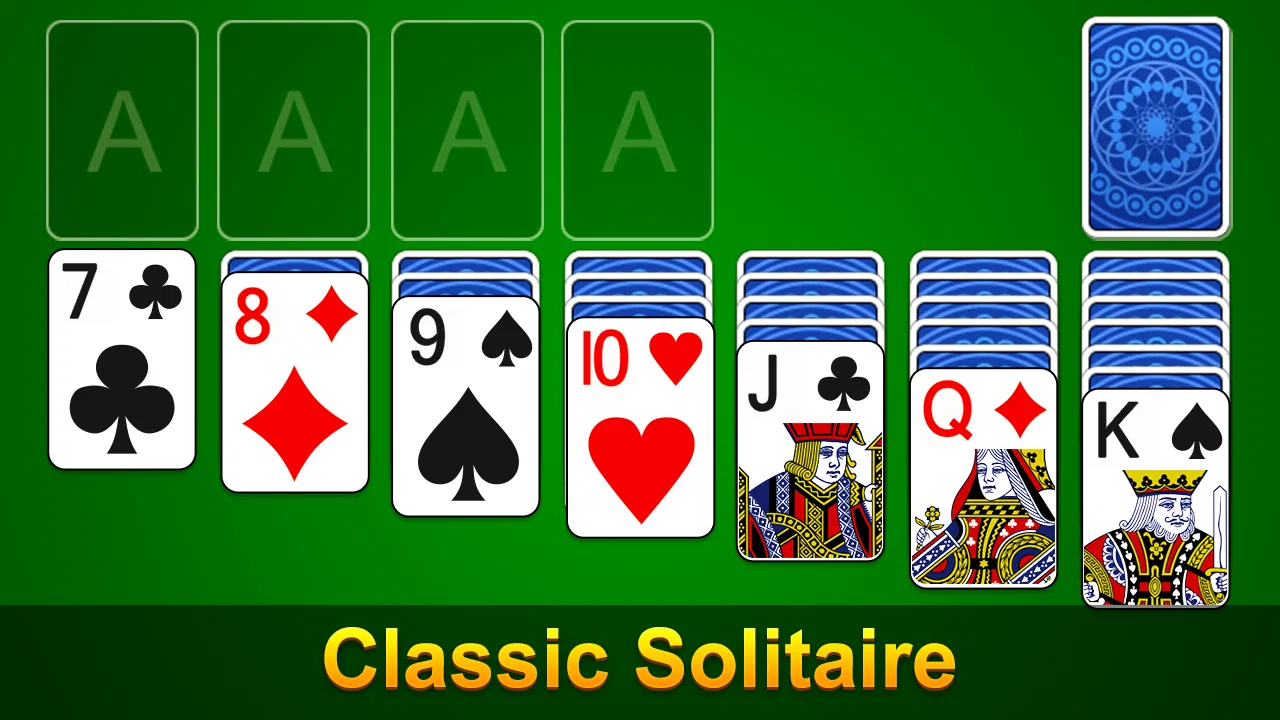
I spent time with Solitaire - Classic Card Game as a simple way to play a familiar board game on Android, and its strongest quality is also its clearest purpose: it turns a traditional Solitaire session into something I can start immediately, without needing a table, a deck, or a long learning period. The game comes from Arcade Game Maker, is free to play, and is suitable for Everyone. That combination makes it easy to recommend to someone who wants a quiet card game rather than a large, demanding mobile experience.
What I like most is the focused nature of the experience. This is not trying to be a broad collection of unrelated games. It stays centered on Solitaire, which means the appeal depends on whether you enjoy arranging cards, looking for the next legal move, and accepting that some deals require patience. I found it most useful during short breaks when I wanted something interactive but not mentally exhausting. It is also the kind of game I could hand to a family member who already understands classic Solitaire and does not want to learn complicated controls.
Why its focused Solitaire format works
The central capability here is straightforward digital Solitaire play. The familiar objective remains the reason to return: work through the layout, uncover useful cards, and build the suits in order. Because the rules are recognizable, the game does not need a long tutorial to become enjoyable. I could concentrate on the decisions rather than learning a new system.
You May Also Like

 Blood Strike: 2.5 Anniversary
Blood Strike’s Loadouts Turn Every Drop Into a Tactical Gamble
A close look at Blood Strike’s custom loadouts: how fast access to signature weapons reshapes its battle royale rhythm, rewards preparation, and narrows the gap between fights.

 Pandora - Music & Podcasts
Pandora’s Music Is Easy to Start, but Harder to Recover
Pandora’s strength is its low-effort path from a seed to a station. Its weak spot is how much confidence it asks you to place in connection, setup, and quiet recovery.

 8 Ball Pool
 Is Built on Rivalries, Rematches, and Routine
A close look at the rivalries, rematches, shared routines, and unanswered safety questions that turn a quick pool match into a persistent mobile community.

 Samsung Music
’s Quiet Strength Is Playing What You Already Own
Its reach comes less from spectacle than from dependable access to a personal library. That simplicity is both the app’s strongest retention engine and its ceiling.

 AccuWeather: Weather Radar
AccuWeather Review: A Quick, Clear Forecast for Everyday Decisions
For everyday plans, the best forecast is the one you can understand quickly. AccuWeather makes rain timing, radar, and local conditions easy to act on, with a few trade-offs.

 Hill Climb Racing
Why Hill Climb Racing Still Turns Crashes Into One More Run
A tiny car, a bumpy hill and one more upgrade: Hill Climb Racing keeps resurfacing because its simple chaos makes every near-miss feel personal.
More From Our News Desk
View All News


That familiarity matters more than it may seem. Many mobile board games add layers of missions, currencies, characters, or competitive events. Those additions can be entertaining, but they also change the feeling of a quick card game. This title is more appealing when I want the cards themselves to remain the focus. The experience feels closer to taking a deck from a drawer than opening a large mobile game with several menus competing for attention.
The game has built a substantial audience, with an average rating of 4.5 from roughly 29 thousand ratings and more than 10 million installs. Those figures do not replace personal experience, but they do suggest that the uncomplicated format connects with many players. I can understand why: the learning curve is gentle, while the decisions still give a short session enough structure to feel worthwhile.
I also appreciate that the game is listed under the Board category. That is a better description of its character than calling it an action title or a puzzle adventure. The challenge comes from planning card movement and recognizing opportunities, not from speed, reflexes, or a story. If you prefer games that let you pause mentally between decisions, this format is much more comfortable than a timed arcade game.
What the capability changes in everyday play
Digital Solitaire removes several small obstacles that can make physical play inconvenient. I do not need to shuffle, deal, keep the piles aligned, or check whether a card has slipped beneath another one. That makes a difference when I am playing on a small screen during a spare moment. The game handles the physical maintenance, leaving me with the part I actually came to enjoy: deciding what to move next.
There is also a useful difference between a digital card game and a printed puzzle book. With a book, I may need to carry a pen, track completed attempts, and turn pages before starting again. Here, restarting a session feels much less committed. I can try a layout, stop when I need to, and return later without preparing anything. That convenience makes the game suitable for waiting rooms, public transport, or a short pause between household tasks.
At the same time, the digital format removes some of the tactile pleasure of real cards. I do not get the sound of a deck being shuffled or the physical satisfaction of placing a card on a table. Players who enjoy Solitaire mainly as a hands-on ritual may find a phone screen less relaxing. For me, the convenience outweighs that loss, but it is an important distinction when choosing between this and a physical deck.
How I use it when I have only a few minutes
My preferred routine is to begin a game without treating it as a commitment to finish immediately. I look at the visible layout, identify moves that expose hidden cards, and avoid moving cards simply because a legal move is available. That last habit is important. A legal move is not automatically a useful move, and the better decision is often the one that creates more options for the next few turns.
One practical tip is to think about empty spaces before creating them. An open column can be valuable, but it is not always helpful if I have no suitable sequence ready to place there. I try to uncover hidden cards first when possible, because revealing information gives me a better view of the position. This approach makes the game feel less random and more like a small planning exercise.
Another useful habit is to avoid committing a low card to a foundation too quickly when it could still help organize the tableau. In a physical game, it is easy to move cards automatically because the destination looks obvious. On a phone, I found it helpful to pause and ask whether that card is more useful where it is for building a sequence. This is a small strategic adjustment, but it prevents some self-created dead ends.
For a realistic everyday scenario, imagine waiting for an appointment with only a few minutes available. I would open the game, make several careful moves, and stop when my name is called. The appeal is not that every session must reach a dramatic conclusion. The value is that the game can fill an uncertain amount of time without demanding sound, a stable internet conversation, or fast reactions. It gives the waiting period a little structure while remaining easy to put down.
That same quality makes it suitable before sleep for people who prefer a quiet activity to scrolling through social feeds. I would still avoid treating it as a guaranteed relaxation tool, because losing a promising layout can be mildly frustrating. The best use is when I want gentle concentration, not when I need something completely passive.
Small decisions that make the game more satisfying
I recommend looking at the whole visible layout before making the first move. The initial impulse is often to move the most obvious card, but a quick scan can reveal a better sequence. I pay particular attention to moves that uncover a face-down card or create access to a blocked color. The goal is not to make the board look tidy; it is to increase future choices.
I also try to preserve flexibility. If two moves appear equally useful, I choose the one that leaves more cards available for later. This is especially helpful when the layout contains several possible sequences. A move that looks efficient can be restrictive if it places an important card beneath a sequence that cannot be moved again easily.
Finally, I treat an unsuccessful attempt as information rather than a reason to rush into another one. Solitaire naturally includes positions where earlier choices matter. Reviewing the point at which the layout became blocked can improve the next attempt, especially for players who are used to moving cards instinctively. That reflective element is where the game becomes more than a way to pass time.
The tradeoff between simplicity and variety
The focused design is a strength, but it also sets a limit. If I want several board games in one app, a competitive ladder, or a constantly changing collection of modes, this is unlikely to satisfy me. Its identity is based on Solitaire, so the long-term appeal depends on whether I enjoy repeating the core activity and improving my decisions.
Compared with a physical deck, the game is faster to start and easier to keep tidy, but less tactile. Compared with a general card-game collection, it offers a narrower experience but avoids making me navigate through many unrelated choices. Compared with a multiplayer board game, it is calmer and more private, but it does not provide the social tension of playing against another person. I see that as a tradeoff rather than a flaw.
Players who need constant novelty should think carefully before installing it. The familiar rules are exactly why a beginner can enter quickly, but they are also why someone seeking a deep progression system may lose interest. I would choose this game for repeatable short sessions, not for a long campaign or a sense of collecting achievements.
The free price makes experimentation easy. I can try it without deciding that I need to justify a purchase, which suits a casual game especially well. Still, free access alone does not make every game a good fit. If I already know that I find Solitaire repetitive, the lack of an upfront cost will not change the underlying activity. The right question is whether I enjoy the small decisions at the heart of the format.
The age rating of Everyone broadens its audience. I would feel comfortable suggesting it to someone looking for a family-friendly card game, particularly when the goal is a calm activity with familiar rules. That does not mean every child will find it engaging; younger players may need help understanding why a move that is allowed can still be strategically poor. For adults and older children who already know the basics, the barrier is much lower.
Who should choose it, and who should look elsewhere
I think the best match is a player who wants a dependable Solitaire experience for brief, self-contained sessions. It suits people who enjoy planning without timers, people returning to card games after a long break, and anyone who wants a board-style game that does not require a group. It can also work well for someone moving from physical cards to a phone and wanting the same general challenge in a more portable form.
I would be more cautious recommending it to players who want social play, fast competition, or a broad range of puzzles. A dedicated multiplayer title is a better choice when the important part is interaction with friends. A larger card-game collection is more suitable when variety matters more than a consistent Solitaire routine. Likewise, a story-driven puzzle game will provide more narrative motivation for someone who needs a reason beyond improving the next layout.
One of the most useful ways to decide is to consider how you normally spend short idle periods. If you tend to open a game, play for five minutes, and leave without wanting a complicated save system, this format makes sense. If you prefer one long session with character development, exploration, or increasingly elaborate challenges, the simplicity may feel limiting rather than refreshing.
What to expect from the current release
The game was released on September 26, 2017, and the current version is 1.54.305. It supports Android 6.0 and later, so compatibility is aimed at a wide range of devices rather than only recent phones. For someone using an older Android handset, checking the operating system before installing is a sensible step, but the stated minimum is not especially demanding by modern standards.
The developer, Arcade Game Maker, has kept the product positioned as a straightforward board game rather than presenting it as a large entertainment platform. That clarity helps set expectations. I would install it expecting a familiar Solitaire session, not a social network, a narrative adventure, or a replacement for every card game on my phone.
Its review volume also gives the game a visible history with players: there are around 2.4 thousand written reviews alongside the broader rating activity. I do not treat that as proof that every player will have the same experience, but it reinforces the impression that this is an established casual game rather than a new experiment that still needs to find its audience.
After using it, my recommendation is fairly specific. Choose it if you want a free, familiar Solitaire game that respects short pockets of time. The strongest benefit is not flashy presentation or a huge feature list; it is the reduced friction between deciding to play and actually making the first move. That makes the game easy to return to throughout an ordinary day.
I would skip it if you already know that classic Solitaire does not hold your attention, or if your priority is multiplayer competition and constant variety. For everyone else, especially players who like quiet board games and small strategic choices, it is a sensible download. I found its simplicity more useful than restrictive when I wanted a private card session that could begin and end on my schedule.
In the end, this is a good example of a game that succeeds by staying close to its central idea. Solitaire - Classic Card Game does not need to reinvent the card table to be worthwhile. Its value comes from making a familiar challenge portable, approachable, and easy to fit into real life. If that is exactly what you want from a mobile board game, I would recommend giving it a try.
FAQs for Solitaire - Classic Card Game
01What platforms is Solitaire - Classic Card Game available on?
Solitaire - Classic Card Game is available for both Android and iOS platforms. You can download it from the Google Play Store for Android devices and the Apple App Store for iOS devices. Make sure your device meets the minimum OS requirements to ensure optimal performance.
02Does Solitaire - Classic Card Game require an internet connection to play?
No, Solitaire - Classic Card Game does not require an internet connection to play. This makes it a great option for playing on the go or in areas with limited connectivity. However, some features such as leaderboards or daily challenges might need a connection.
03Are there any in-app purchases in Solitaire - Classic Card Game?
Yes, Solitaire - Classic Card Game offers in-app purchases. These can include ad removal options, additional card themes, or hints. While the game is free to download and play, these purchases can enhance your gaming experience by providing additional customization and convenience.
04Can I customize the appearance of the cards in the game?
Yes, Solitaire - Classic Card Game allows players to customize the appearance of their cards. You can choose from a variety of themes and card backs to personalize your gameplay. Some themes might be available for free, while others can be unlocked through in-app purchases.
05Is there a hint or undo feature available in the game?
Solitaire - Classic Card Game includes both a hint and an undo feature to assist players. The hint feature can suggest the next move if you’re stuck, while the undo feature allows you to reverse previous moves. These tools are perfect for both beginners and seasoned players looking to refine their strategy.
Pros
- Simple and intuitive interface.
- Offline play available.
- Customizable card designs.
- Daily challenges keep it fresh.
- Light on device resources.
Cons
- Contains ads between games.
- Limited multiplayer options.
- No cloud save feature.
- In-app purchases for themes.
- Lacks tutorial for beginners.

Solitaire - Classic Card Game
Gallery